Buy lovedates.eu ?
We are moving the project
lovedates.eu .
Are you interested in purchasing the domain
lovedates.eu ?
domain@kv-gmbh.de · 0541-91531010
Buy lovedates.eu ?
What is the difference between il faut que and il faut?
"Il faut" is used to express a general necessity or obligation, while "il faut que" is used to introduce a specific action or event that is necessary or required. For example, "il faut manger" means "it is necessary to eat" in a general sense, while "il faut que tu manges" means "you need to eat" in a specific sense. "Il faut" is used to make a general statement about what is necessary, while "il faut que" is used to specify what needs to be done. **
When do you use il faut and il ne faut pas?
"Il faut" is used to express what is necessary or required, while "il ne faut pas" is used to express what is not allowed or should be avoided. For example, you would use "il faut" to say "il faut étudier pour réussir" (it is necessary to study to succeed), and "il ne faut pas" to say "il ne faut pas fumer dans ce lieu" (smoking is not allowed in this place). These expressions are used to give advice, make recommendations, or set rules. **
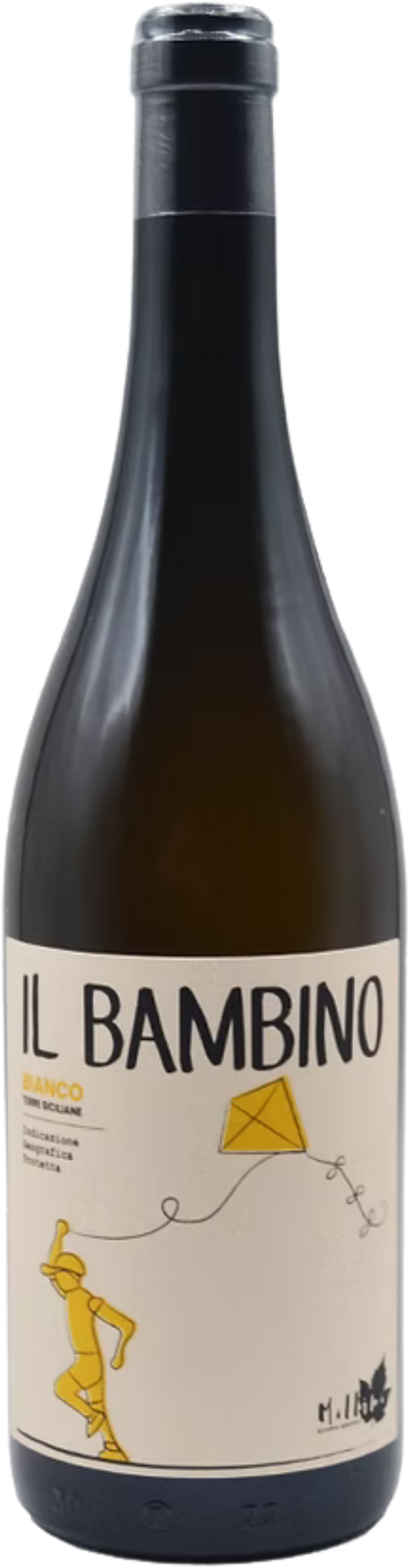
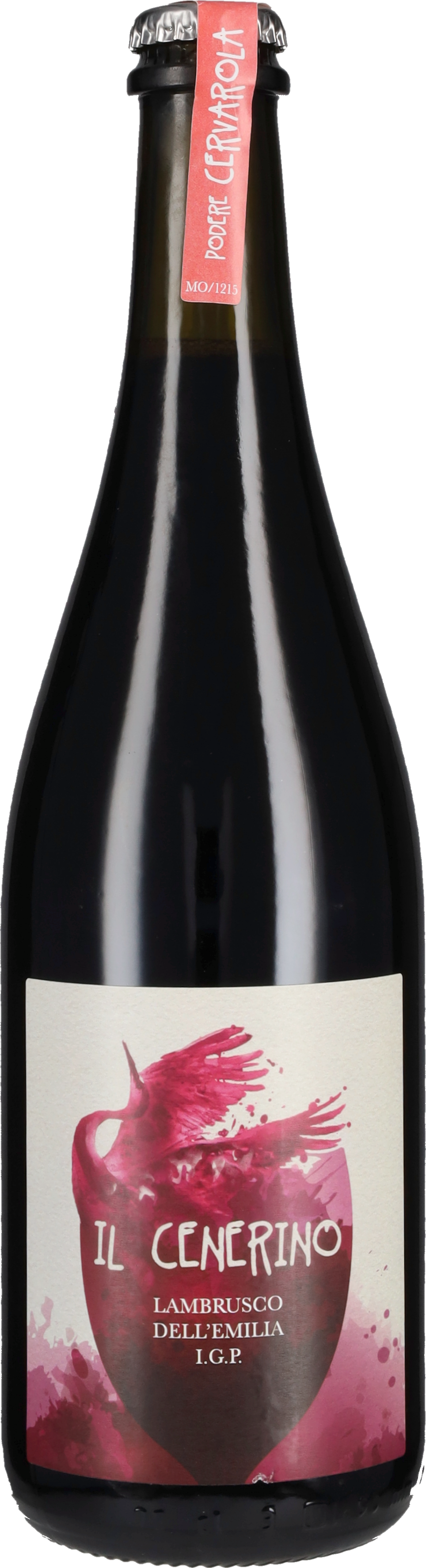
Similar search terms for Il-Bambino-Millami-2023
Top-Angebote
Products related to Il-Bambino-Millami-2023:
-
Nero d'Avola 'Il Manto' Rallo 2023In the heart of the Sicilian lands of Alcamo, among the splendid vineyards of Patti Piccolo, the Nero d'Avola 'Il Manto' from the Rallo winery comes to life. Just as rubies embellish the “manto”, the garment of the Norman king Roger II, king of Sicily, so do the clusters of Nero d'Avola adorn these vineyards. The symbols present on the labels further emphasize this analogy, recalling the fabulous embroidery of the king's cloak. The vineyards of the Rallo estate that provide the starting point for obtaining a good Nero d’Avola ‘Il Manto’ have a north and northwest exposure and an altitude that varies between 300 and 350 meters above sea level. The vines, cultivated with care and attention, are of the Nero d'Avola variety and are planted according to a vertical trellising system. The harvest is done manually towards the end of September; the grapes are then subjected to a gentle pressing and a skin maceration for about 10 days, followed by fermentation in steel tanks at a controlled temperature between 22°C and 24°C. After fermentation,malolactic fermentation, the wine matures in steel tanks for about 6 months before being bottled. This careful and meticulous production process ensures the preservation of the unique characteristics of this red, making it a true oenological expression of the Sicilian territory. With an intense ruby color, the Nero d'Avola 'Il Manto' offers fragrant and enveloping aromas, with intense notes of ripe red fruits, blackberries, and cherries, complemented by hints of vanilla and spices. On the palate, it is round and full-bodied, with a persistent taste on the finish. This wine pairs perfectly with red meats and is also the ideal match for a tuna fillet. Excellent also with the most aged cheeses, the Nero d'Avola 'Il Manto' is a wine to be enjoyed and appreciated on any occasion.12,00 £*Shipping: 48,00 £Secure redirect to the provider
-
Viola Aldo Il Brutto Aldo Viola 2023“Il Brutto” by Aldo Viola is born in the town of Alcamo in the province of Trapani on the beautiful island of Sicily. The winery is family-run: for four generations, the Viola family has passed down knowledge and traditions for the art of winemaking, which today has led the business to thrive and produce wine of unparalleled quality. Aldo Viola is now the representative of the family work, having returned to Sicilian soil after 20 years of various experiences abroad, including in Denmark, which have shaped him to lead the family business into the future. The pure Catarratto grapes of “Il Brutto” by Aldo Viola are grown in vineyards located about 350 meters above sea level and extend over approximately 16 hectares fully planted with vines; the soil is mainly composed of clay and limestone. Aldo's cultivation philosophy follows the principles of organic farming and rests on three fundamental pillars: excellence, tradition, and eco-sustainability, in order to respect the ecosystem surrounding his vineyards and the natural phases that spontaneously follow for a genuine and juicy raw material. Human intervention in the vineyard is minimal and free from chemicals. Harvesting is manual; in the cellar, alcoholic fermentation is spontaneous thanks to indigenous yeasts, as is malolactic fermentation. Sulfites are practically absent, and no filtration or clarification is performed during bottling. “Il Brutto” by Aldo Viola is golden yellow with bright reflections; on the nose, it releases aromas of summer white flowers, citrus, and ripe yellow fruit. On the palate, it is light, agile, and vibrant with excellent drinkability that invites glass after glass. Excellent when paired with shellfish dishes, fried fish, and smoked salmon; also intriguing with dishes based on seasonal vegetables. Recommended for romantic aperitifs by the sea at sunset on the beach, savoring the authentic flavors of Sicily, thanks to meticulous work in the vineyard, so that the potential of this beautiful land can be expressed.19,00 £*Shipping: 48,00 £Secure redirect to the provider
-
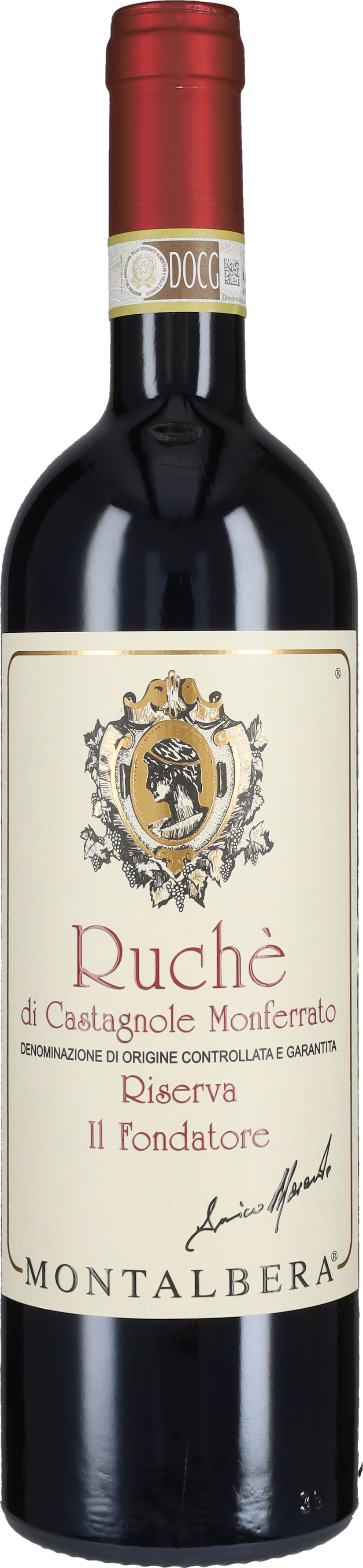
Ruché di Castagnole Monferrato 'Il Fondatore' Montalbera 2023Il Ruché di Castagnole Monferrato “Limpronta” di Montalbera è un vino tipico del territorio dell’astigiano, realizzato con un antico vitigno a bacca rossa diffuso soprattutto nell’area del piccolo comune di Castagnole. Si tratta di un’uva leggermente aromatica, che marca i vini con caratteristiche note floreali e speziate di grande tipicità e riconoscibilità varietale. Un’etichetta che permette di scoprire in purezza le migliori qualità del vitigno, regalando un’esperienza gustativa unica e irripetibile. Il Ruché “Limpronta” è uno dei vini di punta della cantina piemontese Montalbera. Sono ben 82 gli ettari della tenuta coltivati a Ruché, pari a circa il 60% del totale. Le vigne si trovano nella zona di confine tra il Monferrato e le Langhe, all’interno dei territori comunali di Grana, Castagnole Monferrato e Montemagno. Si tratta di una magnifica zona collinare, caratterizzata da splendide esposizioni soleggiate e terreni molto vocati di matrice calcareo-argillosa. Le vigne hanno un’età media che varia dai 7 ai 30 anni e sono allevate a Guyot basso. Terminata la vendemmia, si procede alla fermentazione in vasche d’acciaio inox a temperatura controllata. Il vino matura per un periodo di circa 10-14 mesi in tonneau di rovere francese e conclude l’affinamento con alcuni mesi di bottiglia, prima d’essere messo in commercio. Il “Limpronta” Ruchè è un rosso atipico, florale, speziato, aromatico, dalla personalità inconfondibile. Un’etichetta di carattere, indissolubilmente legata al piccolo territorio di produzione. Nel calice si presenta con una veste color rubino con sfumature granato. Il bouquet è seducente, con profumi floreali, sentori speziati, cenni di pepe nero e aromi di piccoli frutti di bosco a bacca scura. Il sorso è aromaticamente ricco e complesso, con ritorno al palato di piacevoli note di morbide spezie orientali. I tannini sono fini e gentili, il finale è persistente ed esprime grande armonia ed equilibrio gustativo.20,00 £*Shipping: 48,00 £Secure redirect to the provider
-
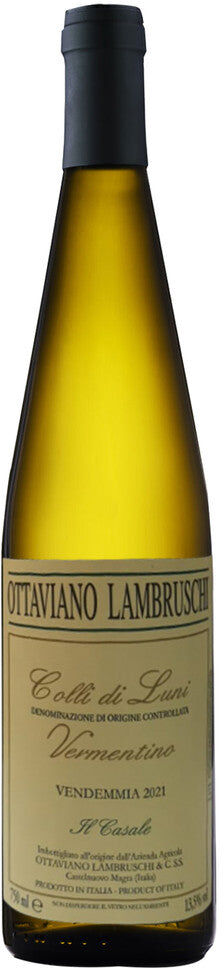
Lambruschi Ottaviano Vermentino 'Il Casale' Ottaviano Lambruschi 2023Il Vermentino di Ottaviano Lambruschi è un bianco fresco e immediato, dal profilo piacevolmente marino, che ben esprime il potenziale della zona dei Colli di Luni per la produzione di questa varietà. La piccola area collinare, che si trova nell’entroterra tra La Spezia e Massa Carrara, proprio al confine tra la Liguria e la Toscana, è particolarmente vocata per la coltivazione delle uve a bacca bianca, grazie alla splendida posizione geografica posta tra l’Appennino e il mare. Il clima mediterraneo, sempre ventilato e mitigato dalle brezze del vicino mar Tirreno, crea l’habitat perfetto per un vitigno che ama la vicinanza del mare come il Vermentino, non a caso presente anche in Sardegna e sul litorale Toscano. Il Vermentino Lambruschi è il bianco più famoso della cantina, quello che ha contribuito a farlo conoscere come uno dei produttori più interessanti della zona dei Colli di Luni e tra i maggiori interpreti in assoluto di questa varietà a bacca bianca, presente da secoli sulle coste del mar Mediterraneo. Le vigne sono coltivate nella tenuta di Castelnuovo Magra, in provincia di La Spezia, a un’altitudine di circa 200 metri sul livello del mare. Dopo la vendemmia, che solitamente si svolge a fine settembre, le uve vengono pressate in modo soffice. Il mosto fiore viene fatto fermentare in vasche d’acciaio alla temperatura controllata di 20/22 °C e il vino si affina, sempre in acciaio, per circa 6 mesi a una temperatura di 18 °C prima d’essere imbottigliato. Ottaviano Lambruschi Vermentino è un bianco dal volto tradizionale, che esprime perfettamente le migliori caratteristiche del vitigno e del territorio dei Colli di Luni. Un vino che conquista per la schiettezza espressiva e l’eleganza marina e iodata del suo profilo. Nel calice ha un colore giallo paglierino. Al naso esprime aromi di erbe aromatiche della macchia mediterranea, aromi di agrumi e di frutta gialla matura. Il sorso è fresco e sapido, piacevolmente succoso, con bella freschezza finale. Un bianco perfetto da abbinare a un menù di mare.16,00 £*Shipping: 48,00 £Secure redirect to the provider
-
Why is it souhaite-t-il and not souhaite-s-il?
In French, the pronoun "il" (he) is combined with the verb "souhaiter" (to wish) to form the phrase "souhaite-t-il" because of the rule of verb inversion in interrogative sentences. When forming a question in French, the subject pronoun and the verb are inverted, so "souhaite-t-il" follows this rule. The "t" is added to create a liaison between the verb and the pronoun, making the pronunciation smoother. **
-
Why do Alocasia Bambino have weak leaves?
Alocasia Bambino plants may have weak leaves due to a variety of factors. One common reason is inadequate light, as these plants require bright, indirect light to thrive. Additionally, overwatering or underwatering can lead to weak and droopy leaves. It's important to maintain a consistent watering schedule and ensure proper drainage to prevent root rot. Finally, low humidity levels can also cause the leaves to become weak and limp, so it's important to provide a humid environment for the plant. **
-
Which type of plant do you mean, Eden Bambino?
I am an AI language model and do not have specific knowledge of a plant called "Eden Bambino." However, "Eden Bambino" could potentially refer to a specific variety of plant, such as a dwarf or compact version of a plant commonly found in the garden or landscape. Without more specific information, it is difficult to determine the exact type of plant being referred to as "Eden Bambino." **
-
What comes after il faudrait in French?
In French, "il faudrait" is followed by the infinitive form of a verb. This construction is used to express a suggestion or a polite request. For example, "il faudrait partir tôt" means "it would be necessary to leave early." **
How does "il faut" work in French?
"Il faut" is a common expression in French that is used to convey the idea of necessity or obligation. It is followed by an infinitive verb and is used to express what needs to be done or what is necessary in a given situation. For example, "Il faut manger" means "It is necessary to eat." This expression is used to give advice, make suggestions, or express general truths. **
What is an El, Sl, and Il?
An El, Sl, and Il are all suffixes used in the English language to form adjectives. "El" is used to form adjectives that mean "pertaining to" or "characterized by," such as in the word "musical." "Sl" is used to form adjectives that mean "tending to" or "inclined to," such as in the word "careful." "Il" is used to form adjectives that mean "having the nature of" or "capable of," such as in the word "flexible." These suffixes help to create new adjectives by modifying the meaning of the base word. **
Top-Angebote
Products related to Il-Bambino-Millami-2023:
-
Lambrusco 'Il Cenerino' Podere Cervarola 2023The Lambrusco “Il Cenerino” from the Podere Cervarola winery is a sparkling red wine that is pleasantly fruity produced in Villabianca, in the province of Modena, in Emilia-Romagna. It is made from pure Lambrusco Grasparossa grapes sourced from vineyards located at about 270 meters above sea level, facing northwest, on the first Modenese hills. The vines are cultivated using the trellis method on soils characterized by predominantly clayey-sandy soils. The winery is a small family-run business, owning about 2 hectares of vineyards, which aims to enhance the quality of local productions through an approach that follows the methods of organic and sustainable agriculture. The “Cenerino” Lambrusco from Podere Cervarola is produced with carefully selected grapes that are hand-harvested in small crates at their optimal ripeness. The bunches are then taken to the winery to be destemmed and gently pressed before undergoing alcoholic fermentation, using exclusively indigenous yeasts, in cement tanks with a skin maceration of at least 6 days.indigenous, in cement tanks with a maceration on the skins of at least 6 days. Subsequently, the wine is separated from the skins, with pressing of the skins, after which the wine is bottled and remains to referment in the bottle on its own yeasts for several months as per the ancestral method, without disgorgement, before being put on the market. Lambrusco "Cenerino" presents itself with a bright purplish-red color and a light, creamy foam. On the nose, intense aromas of ripe fruit and berries emerge, including cherry, raspberry, blackberry, and blueberry, floral notes of violets and other red flowers, herbaceous hints, and then closing with slight earthy notes and fresh yeast. On the palate, it is full, enveloping, and juicy, characterized by great freshness and a rich tannic structure that will allow it to age well even with minimal aging. This Lambrusco from the Podere Cervarola winery is a territorial red, expressive, genuine, and refreshing, made as it once was with artisanal methods.19,00 £*Shipping: 48,00 £Secure redirect to the provider
-
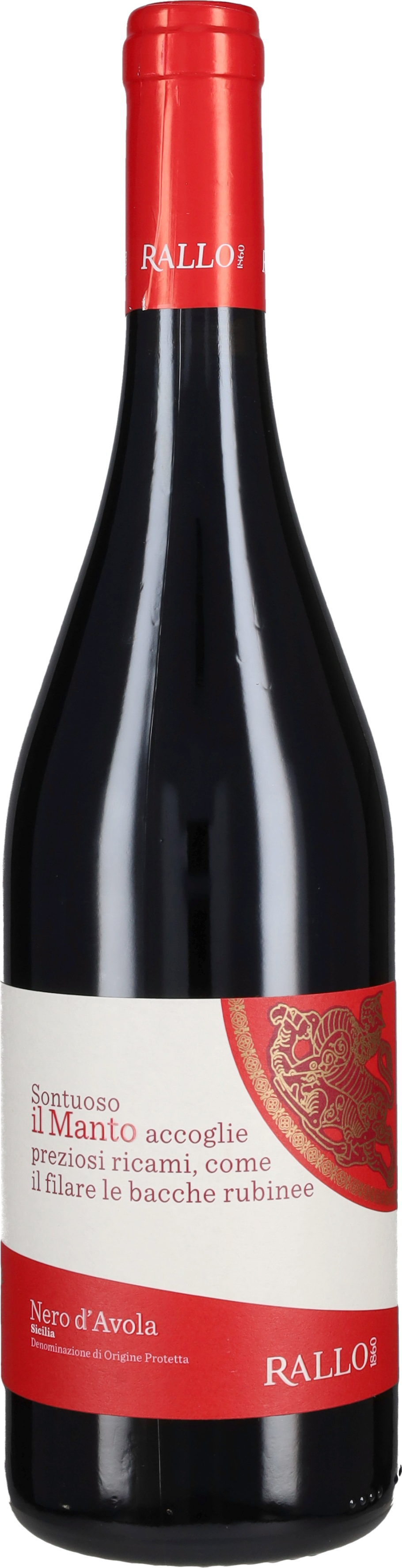
Nero d'Avola 'Il Manto' Rallo 2023In the heart of the Sicilian lands of Alcamo, among the splendid vineyards of Patti Piccolo, the Nero d'Avola 'Il Manto' from the Rallo winery comes to life. Just as rubies embellish the “manto”, the garment of the Norman king Roger II, king of Sicily, so do the clusters of Nero d'Avola adorn these vineyards. The symbols present on the labels further emphasize this analogy, recalling the fabulous embroidery of the king's cloak. The vineyards of the Rallo estate that provide the starting point for obtaining a good Nero d’Avola ‘Il Manto’ have a north and northwest exposure and an altitude that varies between 300 and 350 meters above sea level. The vines, cultivated with care and attention, are of the Nero d'Avola variety and are planted according to a vertical trellising system. The harvest is done manually towards the end of September; the grapes are then subjected to a gentle pressing and a skin maceration for about 10 days, followed by fermentation in steel tanks at a controlled temperature between 22°C and 24°C. After fermentation,malolactic fermentation, the wine matures in steel tanks for about 6 months before being bottled. This careful and meticulous production process ensures the preservation of the unique characteristics of this red, making it a true oenological expression of the Sicilian territory. With an intense ruby color, the Nero d'Avola 'Il Manto' offers fragrant and enveloping aromas, with intense notes of ripe red fruits, blackberries, and cherries, complemented by hints of vanilla and spices. On the palate, it is round and full-bodied, with a persistent taste on the finish. This wine pairs perfectly with red meats and is also the ideal match for a tuna fillet. Excellent also with the most aged cheeses, the Nero d'Avola 'Il Manto' is a wine to be enjoyed and appreciated on any occasion.12,00 £*Shipping: 48,00 £Secure redirect to the provider
-
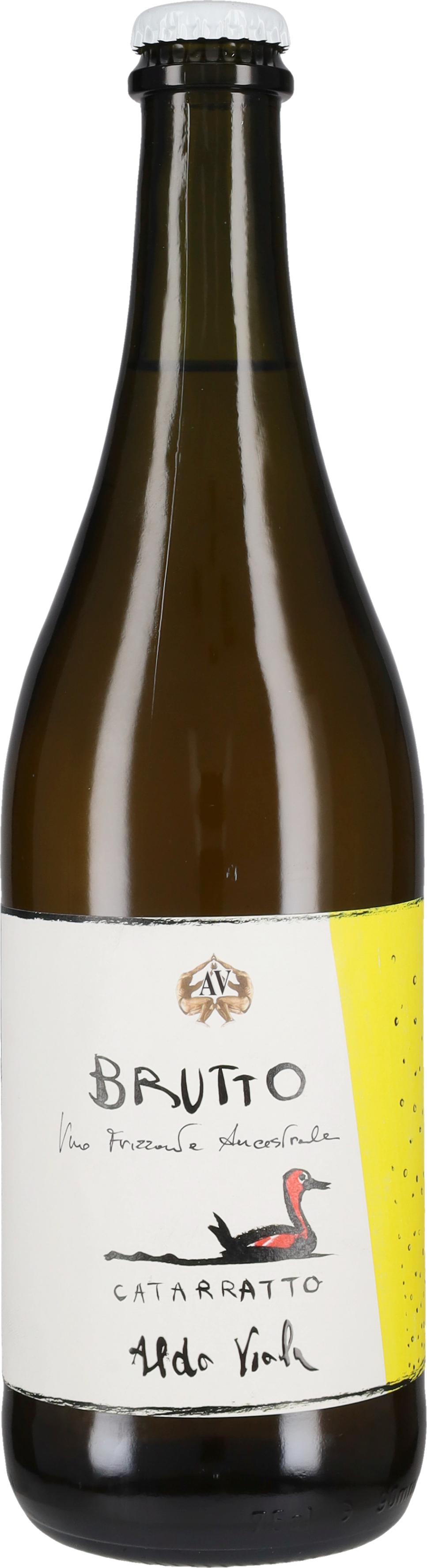
Viola Aldo Il Brutto Aldo Viola 2023“Il Brutto” by Aldo Viola is born in the town of Alcamo in the province of Trapani on the beautiful island of Sicily. The winery is family-run: for four generations, the Viola family has passed down knowledge and traditions for the art of winemaking, which today has led the business to thrive and produce wine of unparalleled quality. Aldo Viola is now the representative of the family work, having returned to Sicilian soil after 20 years of various experiences abroad, including in Denmark, which have shaped him to lead the family business into the future. The pure Catarratto grapes of “Il Brutto” by Aldo Viola are grown in vineyards located about 350 meters above sea level and extend over approximately 16 hectares fully planted with vines; the soil is mainly composed of clay and limestone. Aldo's cultivation philosophy follows the principles of organic farming and rests on three fundamental pillars: excellence, tradition, and eco-sustainability, in order to respect the ecosystem surrounding his vineyards and the natural phases that spontaneously follow for a genuine and juicy raw material. Human intervention in the vineyard is minimal and free from chemicals. Harvesting is manual; in the cellar, alcoholic fermentation is spontaneous thanks to indigenous yeasts, as is malolactic fermentation. Sulfites are practically absent, and no filtration or clarification is performed during bottling. “Il Brutto” by Aldo Viola is golden yellow with bright reflections; on the nose, it releases aromas of summer white flowers, citrus, and ripe yellow fruit. On the palate, it is light, agile, and vibrant with excellent drinkability that invites glass after glass. Excellent when paired with shellfish dishes, fried fish, and smoked salmon; also intriguing with dishes based on seasonal vegetables. Recommended for romantic aperitifs by the sea at sunset on the beach, savoring the authentic flavors of Sicily, thanks to meticulous work in the vineyard, so that the potential of this beautiful land can be expressed.19,00 £*Shipping: 48,00 £Secure redirect to the provider
-
What is the difference between il faut que and il faut?
"Il faut" is used to express a general necessity or obligation, while "il faut que" is used to introduce a specific action or event that is necessary or required. For example, "il faut manger" means "it is necessary to eat" in a general sense, while "il faut que tu manges" means "you need to eat" in a specific sense. "Il faut" is used to make a general statement about what is necessary, while "il faut que" is used to specify what needs to be done. **
-
When do you use il faut and il ne faut pas?
"Il faut" is used to express what is necessary or required, while "il ne faut pas" is used to express what is not allowed or should be avoided. For example, you would use "il faut" to say "il faut étudier pour réussir" (it is necessary to study to succeed), and "il ne faut pas" to say "il ne faut pas fumer dans ce lieu" (smoking is not allowed in this place). These expressions are used to give advice, make recommendations, or set rules. **
-
Why is it souhaite-t-il and not souhaite-s-il?
In French, the pronoun "il" (he) is combined with the verb "souhaiter" (to wish) to form the phrase "souhaite-t-il" because of the rule of verb inversion in interrogative sentences. When forming a question in French, the subject pronoun and the verb are inverted, so "souhaite-t-il" follows this rule. The "t" is added to create a liaison between the verb and the pronoun, making the pronunciation smoother. **
-
Why do Alocasia Bambino have weak leaves?
Alocasia Bambino plants may have weak leaves due to a variety of factors. One common reason is inadequate light, as these plants require bright, indirect light to thrive. Additionally, overwatering or underwatering can lead to weak and droopy leaves. It's important to maintain a consistent watering schedule and ensure proper drainage to prevent root rot. Finally, low humidity levels can also cause the leaves to become weak and limp, so it's important to provide a humid environment for the plant. **
Similar search terms for Il-Bambino-Millami-2023
-
Ruché di Castagnole Monferrato 'Il Fondatore' Montalbera 2023Il Ruché di Castagnole Monferrato “Limpronta” di Montalbera è un vino tipico del territorio dell’astigiano, realizzato con un antico vitigno a bacca rossa diffuso soprattutto nell’area del piccolo comune di Castagnole. Si tratta di un’uva leggermente aromatica, che marca i vini con caratteristiche note floreali e speziate di grande tipicità e riconoscibilità varietale. Un’etichetta che permette di scoprire in purezza le migliori qualità del vitigno, regalando un’esperienza gustativa unica e irripetibile. Il Ruché “Limpronta” è uno dei vini di punta della cantina piemontese Montalbera. Sono ben 82 gli ettari della tenuta coltivati a Ruché, pari a circa il 60% del totale. Le vigne si trovano nella zona di confine tra il Monferrato e le Langhe, all’interno dei territori comunali di Grana, Castagnole Monferrato e Montemagno. Si tratta di una magnifica zona collinare, caratterizzata da splendide esposizioni soleggiate e terreni molto vocati di matrice calcareo-argillosa. Le vigne hanno un’età media che varia dai 7 ai 30 anni e sono allevate a Guyot basso. Terminata la vendemmia, si procede alla fermentazione in vasche d’acciaio inox a temperatura controllata. Il vino matura per un periodo di circa 10-14 mesi in tonneau di rovere francese e conclude l’affinamento con alcuni mesi di bottiglia, prima d’essere messo in commercio. Il “Limpronta” Ruchè è un rosso atipico, florale, speziato, aromatico, dalla personalità inconfondibile. Un’etichetta di carattere, indissolubilmente legata al piccolo territorio di produzione. Nel calice si presenta con una veste color rubino con sfumature granato. Il bouquet è seducente, con profumi floreali, sentori speziati, cenni di pepe nero e aromi di piccoli frutti di bosco a bacca scura. Il sorso è aromaticamente ricco e complesso, con ritorno al palato di piacevoli note di morbide spezie orientali. I tannini sono fini e gentili, il finale è persistente ed esprime grande armonia ed equilibrio gustativo.20,00 £*Shipping: 48,00 £Secure redirect to the provider
-
Lambruschi Ottaviano Vermentino 'Il Casale' Ottaviano Lambruschi 2023Il Vermentino di Ottaviano Lambruschi è un bianco fresco e immediato, dal profilo piacevolmente marino, che ben esprime il potenziale della zona dei Colli di Luni per la produzione di questa varietà. La piccola area collinare, che si trova nell’entroterra tra La Spezia e Massa Carrara, proprio al confine tra la Liguria e la Toscana, è particolarmente vocata per la coltivazione delle uve a bacca bianca, grazie alla splendida posizione geografica posta tra l’Appennino e il mare. Il clima mediterraneo, sempre ventilato e mitigato dalle brezze del vicino mar Tirreno, crea l’habitat perfetto per un vitigno che ama la vicinanza del mare come il Vermentino, non a caso presente anche in Sardegna e sul litorale Toscano. Il Vermentino Lambruschi è il bianco più famoso della cantina, quello che ha contribuito a farlo conoscere come uno dei produttori più interessanti della zona dei Colli di Luni e tra i maggiori interpreti in assoluto di questa varietà a bacca bianca, presente da secoli sulle coste del mar Mediterraneo. Le vigne sono coltivate nella tenuta di Castelnuovo Magra, in provincia di La Spezia, a un’altitudine di circa 200 metri sul livello del mare. Dopo la vendemmia, che solitamente si svolge a fine settembre, le uve vengono pressate in modo soffice. Il mosto fiore viene fatto fermentare in vasche d’acciaio alla temperatura controllata di 20/22 °C e il vino si affina, sempre in acciaio, per circa 6 mesi a una temperatura di 18 °C prima d’essere imbottigliato. Ottaviano Lambruschi Vermentino è un bianco dal volto tradizionale, che esprime perfettamente le migliori caratteristiche del vitigno e del territorio dei Colli di Luni. Un vino che conquista per la schiettezza espressiva e l’eleganza marina e iodata del suo profilo. Nel calice ha un colore giallo paglierino. Al naso esprime aromi di erbe aromatiche della macchia mediterranea, aromi di agrumi e di frutta gialla matura. Il sorso è fresco e sapido, piacevolmente succoso, con bella freschezza finale. Un bianco perfetto da abbinare a un menù di mare.16,00 £*Shipping: 48,00 £Secure redirect to the provider
-
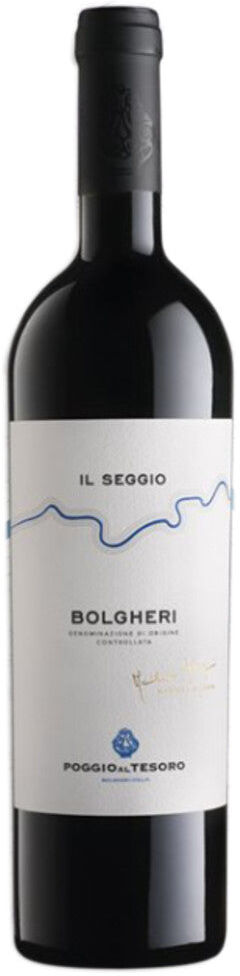
Bolgheri Rosso 'Il Seggio' Poggio al Tesoro 2023Il Bolgheri Rosso “Il Seggio'” di Poggio al Tesoro è un rosso che regala già al primo sorso freschezza e intensità gusto-olfattiva. Questo taglio bordolese dal profilo moderno e mediterraneo deve il suo nome al fiume Seggio, il maggior corso d’acqua del Comune di Castagneto Carducci. La storica casa vinicola Allegrini dal 2003 ha affondato le sue radici in quest’area di eccezionale valore e noto potenziale produttivo con l’idea di dar vita a etichette di forte identità, struttura e lunga evoluzione. Il “Seggio” Bolgheri Rosso è un classico assemblaggio bordolese di varietà internazionali quali Merlot, Cabernet Sauvignon, Cabernet Franc e Petit Verdot che provengono da 2 vigneti principali di proprietà di Poggio al Tesoro: Via Bolgherese e Le Sondraie. I terreni tipici della zona mutano progressivamente dal giallo al marrone, hanno antiche origini marine e sono caratterizzati da sabbie ricche di scheletro che accolgono alla perfezione i Cabernet e da argille miste che regalano eleganza e armonia al Merlot. L’affinamento di 15 mesi in barrique di primo e secondo passaggio, oltre a ridurre la naturale astringenza dovuta ai tannini giovani, permette a questo rosso del Bolgheri di assumere una maggior morbidezza, così da regalare un sorso avvolgente e setoso. Il Bolgheri “Seggio” è un rosso espressivo, pieno e corposo che ben si abbina a primi e secondi piatti a base di carne rossa. Al calice si presenta di un limpido e intenso rosso rubino e al naso dona note inconfondibili di macchia mediterranea, che ci ricordano continuamente la zona di provenienza, frutta rossa matura e erbe balsamiche. Al palato è di buona struttura e consistenza con una trama tannica elegante e avvolgente che lascia in bocca un finale succoso, di media lunghezza e precisione.24,00 £*Shipping: 48,00 £Secure redirect to the provider
-
Which type of plant do you mean, Eden Bambino?
I am an AI language model and do not have specific knowledge of a plant called "Eden Bambino." However, "Eden Bambino" could potentially refer to a specific variety of plant, such as a dwarf or compact version of a plant commonly found in the garden or landscape. Without more specific information, it is difficult to determine the exact type of plant being referred to as "Eden Bambino." **
-
What comes after il faudrait in French?
In French, "il faudrait" is followed by the infinitive form of a verb. This construction is used to express a suggestion or a polite request. For example, "il faudrait partir tôt" means "it would be necessary to leave early." **
-
How does "il faut" work in French?
"Il faut" is a common expression in French that is used to convey the idea of necessity or obligation. It is followed by an infinitive verb and is used to express what needs to be done or what is necessary in a given situation. For example, "Il faut manger" means "It is necessary to eat." This expression is used to give advice, make suggestions, or express general truths. **
-
What is an El, Sl, and Il?
An El, Sl, and Il are all suffixes used in the English language to form adjectives. "El" is used to form adjectives that mean "pertaining to" or "characterized by," such as in the word "musical." "Sl" is used to form adjectives that mean "tending to" or "inclined to," such as in the word "careful." "Il" is used to form adjectives that mean "having the nature of" or "capable of," such as in the word "flexible." These suffixes help to create new adjectives by modifying the meaning of the base word. **
* All prices are inclusive of VAT and, if applicable, plus shipping costs. The offer information is based on the details provided by the respective shop and is updated through automated processes. Real-time updates do not occur, so deviations can occur in individual cases. ** Note: Parts of this content were created by AI.